Three Spam Updates in Eight Months: Google's 2026 Enforcement Pace and What It Means for Ecommerce Content
The August 2026 spam update rolled out in under three days, the third this year. Faster rollouts and continuous background adjustments change how you diagnose a drop and how you should be producing content.
7 min read
Google released the August 2026 spam update on 18 August and confirmed completion on 21 August, a rollout of roughly two days and sixteen hours. It was the third confirmed spam update of the year, after March and June.
Set against last year, the change in tempo is the story. The August 2025 spam update took around four weeks to complete. All three 2026 updates finished inside three days, and March completed in under twenty hours, the fastest confirmed spam rollout on record.
Six weeks ago we wrote about diagnosing the early August ranking volatility when nothing had been confirmed. This is the follow-up now that something has.
What the pace actually changes
Three practical consequences, and only the first is obvious.
Less time reading noise. When a rollout took a month, mid-rollout data was unreliable for weeks and everybody made decisions on it anyway. A three day rollout means you can start analysing settled data within a week. That is a genuine improvement in working conditions.
Harder attribution. Faster and more frequent updates, combined with Google's move to running smaller core adjustments continuously without announcement, means there is less clean space between events. A drop in September could be August spam update aftermath, an unannounced core adjustment, or neither. Anchoring your diagnosis to a named rollout window works less well than it used to.
No more waiting for the next big one. The old recovery pattern was to fix things and wait three or four months for the next broad core update to reassess you. With continuous background adjustment, reassessment is more gradual and less tied to a date. The upside is that good work can be recognised sooner. The downside is that there is no clear finish line to point at when someone asks when recovery happens.
📌
Google did not announce new spam policy types alongside the August update, and the spam policies page has not changed since December. The rules are the same rules. What improved is detection, not the definition of what counts.
Spam update or core update, and why it decides your response
This distinction gets blurred constantly and it determines what you should do, so it is worth being exact.
| Spam update | Core update | |
|---|---|---|
| What it does | Improves detection of violations of published spam policies | Reassesses overall quality and relevance |
| Why you were hit | You breached a specific policy | Your content was judged less useful relative to alternatives |
| The fix | Find the policy breach and remove it | Broad, slower work to make the site genuinely more useful |
| Recovery shape | Can be relatively direct once the cause is removed | Gradual, and never guaranteed |
If you dropped during the August window, work the spam policies list first, because a spam-driven drop points at something specific and findable. If nothing in the policies applies to you, you are probably looking at a quality reassessment instead, and the response is entirely different.
Where ecommerce sites actually get caught
In our audits, the spam policy issues that hit commerce sites are rarely deliberate. Four recurring patterns:
- Scaled content abuse. Hundreds of near-identical pages generated from a template with little differentiation between them. This is where programmatic SEO goes wrong, and the line is not the automation, it is whether each page has a reason to exist. We set out where that line sits in our piece on when programmatic SEO works.
- Thin doorway pages. Location or category pages that exist to catch a keyword and then send everyone to the same place. Very common on stores that built geo pages in bulk.
- Site reputation abuse. Third-party content hosted on your domain to borrow its authority. Usually a coupon subdomain or a rented content section nobody in the marketing team remembers agreeing to.
- Legacy link practices. Paid or exchanged links from an old campaign. Worth noting Google's position that once systems discount spammy links, any ranking benefit they generated is lost and cannot be regained, so removing them restores nothing. That is a reason to stop, not a route to recovery.
The August update targets manipulative AI-generated content, not the responsible use of AI in content production. That distinction matters for a lot of ecommerce teams currently using models to draft product copy at scale. Generating a description for each of four thousand products is not inherently a violation. Generating four thousand thin articles to catch four thousand keywords is.
The practical test for AI-assisted content
We give clients a single question, and it holds up better than any word count or detection tool.
Would this page exist if search engines did not?
A product description exists because a customer needs to understand the product. A sizing guide exists because people ask. A comparison page exists because buyers genuinely compare those two things. These survive the question regardless of how they were drafted.
A page targeting a keyword that nobody in your business would otherwise write, differing from forty sibling pages only in the noun, does not survive it. The drafting method is not what makes it a problem.
🧹
If you have a bulk-generated section from 2024 or 2025 that has never earned meaningful traffic, September is a good month to deal with it. Consolidate what has value into fewer, better pages and remove the rest. Doing this before peak season means the crawl and index changes settle before your commercially important pages need attention.
What to do in the next fortnight
- Confirm whether you were affected at all. Compare the fourteen days before 18 August against the fourteen days after, in Search Console, segmented by query type. Movements under ten percent are noise.
- If affected, audit against the published spam policies directly. Read them and check your site against each one rather than guessing. The list has not changed since December, which makes this a finite task.
- Check for index bloat. Count your indexed URLs against the number of pages you would defend in a meeting. For commerce sites this gap is often the largest single structural issue we find.
- Do not disavow reflexively. Speculative disavowal causes harm more often than it helps, and by Google's own account removing discounted links does not restore anything.
- Then stop and let it settle. With peak season approaching, large structural changes in October are riskier than leaving a modest ranking loss in place until January.
That last point matters more this year than usual. Between the checkout deadlines already passed, the extension migration due on 1 October and the freeze in November, there is limited appetite for adding a large content restructure to the same quarter. Diagnose now, fix what is clearly a policy breach, and schedule the bigger work for after peak.
🔍
We run technical SEO audits that separate spam policy exposure from quality reassessment and index structure, delivered as a prioritised plan rather than a report. See our technical SEO audit service.
Frequently asked questions
When did the August 2026 spam update roll out?
It began on 18 August and Google confirmed completion on 21 August, a rollout of about two days and sixteen hours. It was the third confirmed spam update of 2026.
Did it introduce new spam policies?
No. Google announced no new policy types and the spam policies documentation has not changed since December. Detection improved rather than the rules.
Does it target AI-generated content?
It targets manipulative content at scale, which includes AI-generated content produced for that purpose. Using AI responsibly to produce content that serves a real need is not the target.
My rankings dropped in September, not August. Is it related?
Possibly, since effects can surface after a rollout completes, but Google also runs smaller core adjustments continuously without announcement. Diagnose from your own data rather than from the rollout calendar.
How long until I recover?
If the cause was a specific policy breach that you have removed, recovery can follow reassessment relatively directly. If the cause was broader quality judgement, expect it to be gradual and treat any specific timeline you are quoted with suspicion.
Related Topics
Related posts
View all articles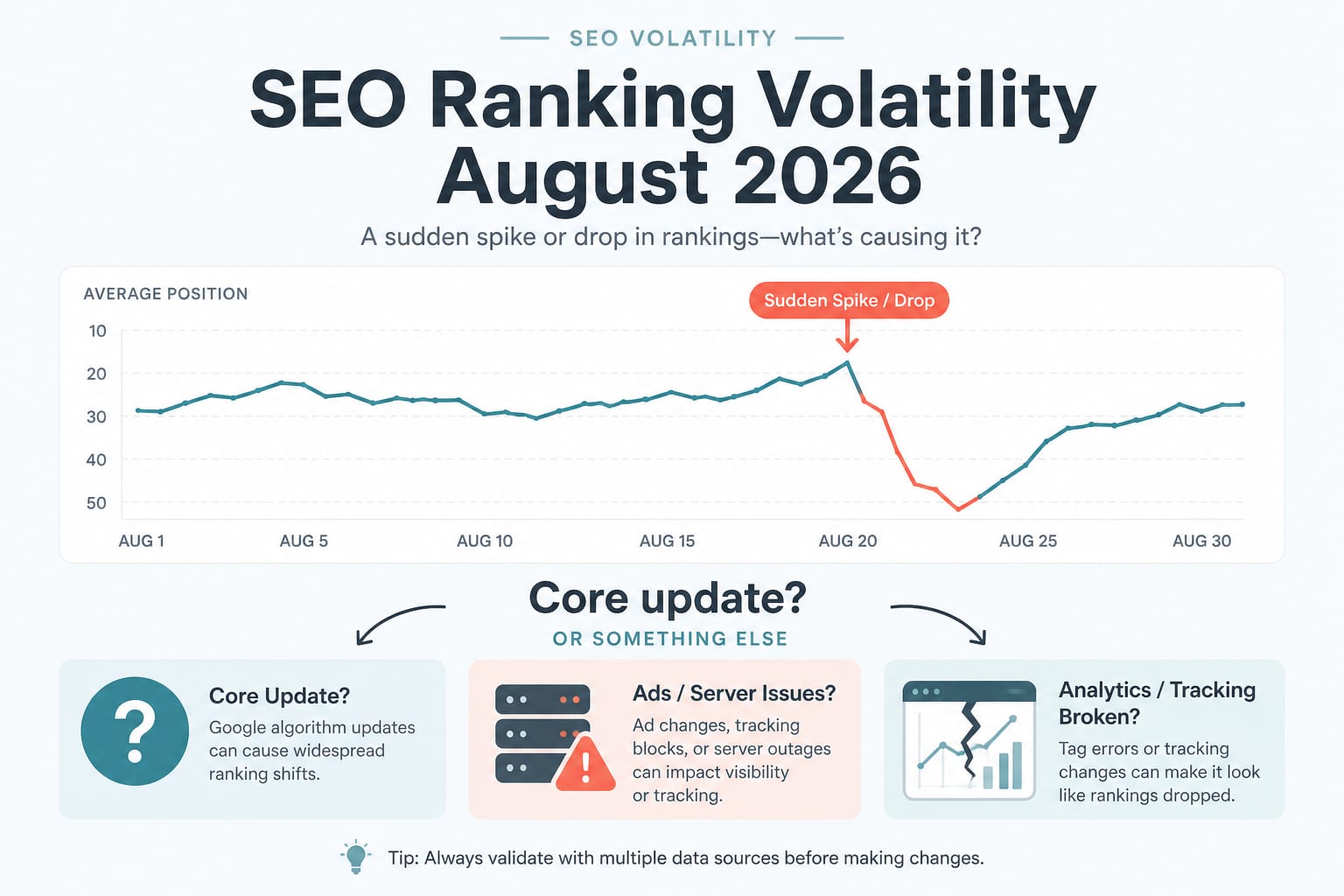
Technical SEOAug 11, 2026
August 2026 Ranking Volatility: Core Update, or Something Else Entirely?
Trackers spiked on 1 August and the forums called it a core update. Google has confirmed nothing. Here is a diagnostic order of operations for separating a real ranking change from an ad server outage and a broken analytics pipeline.
7 min read
Technical SEOApr 30, 2026
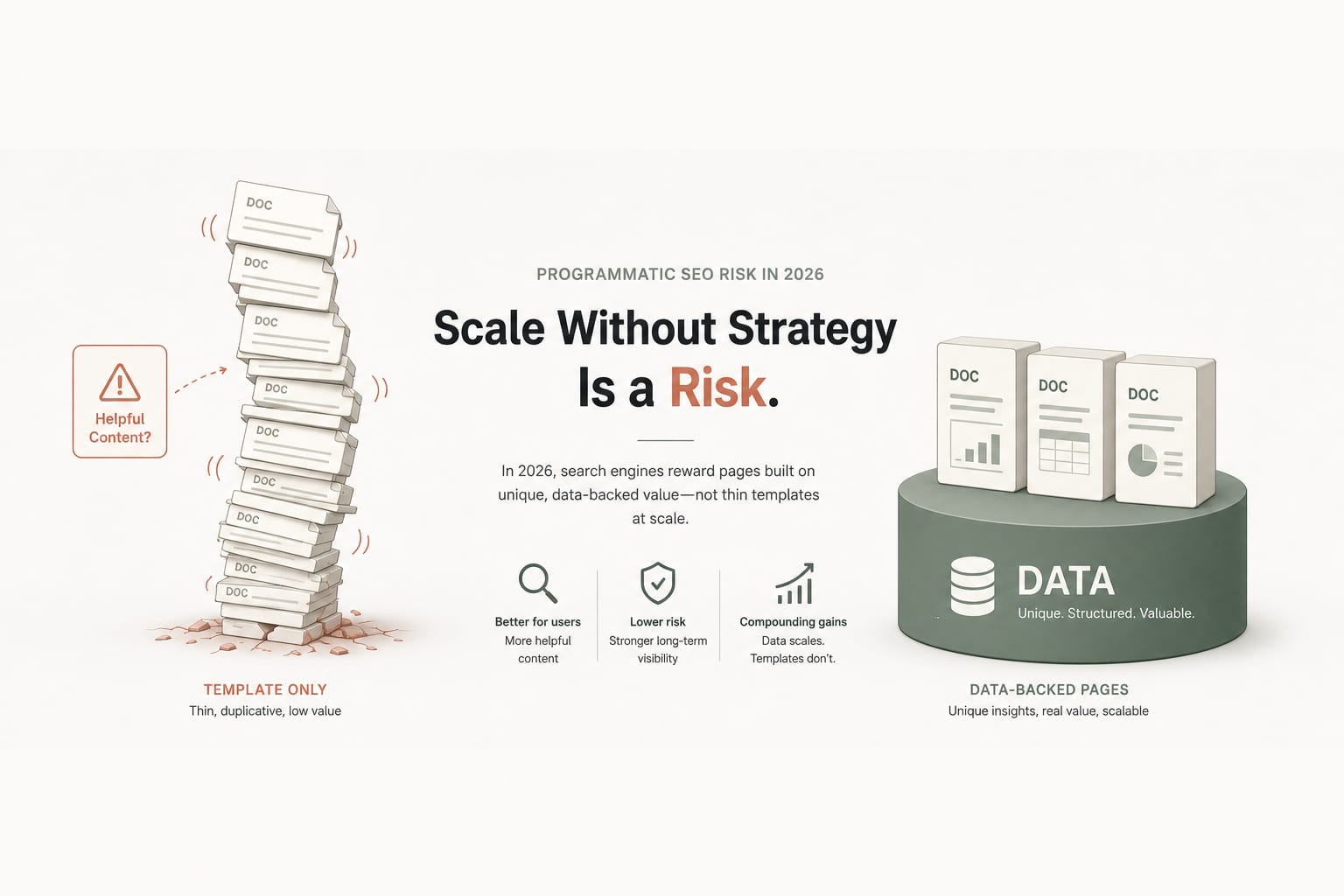
Programmatic SEO in 2026: When It Still Works, When Google Penalizes It, and How to Tell the Difference
Programmatic SEO is not dead. It is just no longer easy. Here is the framework we use in 2026 to decide whether a programmatic SEO project will compound traffic or get nuked by the Helpful Content system in six months.
14 min read
Technical SEOApr 14, 2026
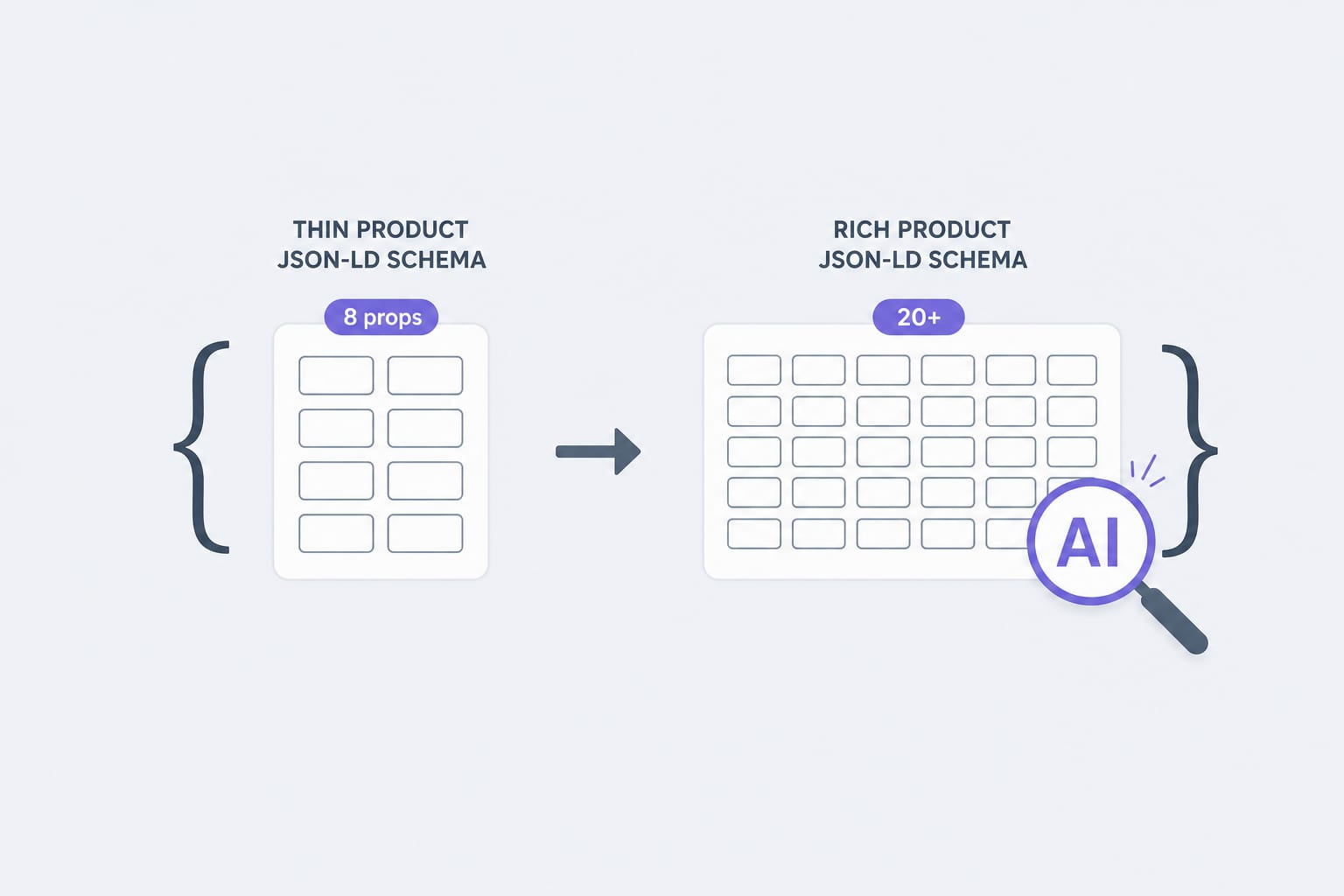
Schema Markup for Shopify in 2026: The JSON-LD Properties AI Agents Actually Read
Traditional Product schema uses 8 to 12 properties. AI agents lean on 20 or more. Here is the property list, the validation rules, and the implementation pattern we use for Shopify stores in 2026.
12 min read