1 October Is Real: The Polaris Web Components Deadline for Checkout Extensions
From 1 October, Shopify blocks updates to any app that still has a checkout or customer account extension on API version 2025-07 or earlier. Three weeks of runway, a mid-peak-season deadline, and a migration most teams have not started.
8 min read
Shopify has set 1 October 2026 as the date after which you cannot deploy an update to an app that still contains a checkout or customer account extension on API version 2025-07 or earlier. That is three weeks from today, and it lands in the window where most stores are trying to stabilise ahead of peak rather than refactor UI code.
The enforcement is a deploy block, not a rendering cutoff. An extension already published on 2025-07 keeps running. Shopify has not said it stops rendering, and there is no automatic bump to a newer version. What you lose on 1 October is the ability to ship any update to that app until the extension is on 2025-10 or later. Those versions use Polaris web components, so the version change and the component migration are the same piece of work.
We are writing about it now for the same reason we wrote about Scripts in July and the thank you page deadline last week. This is the third platform deadline in a quarter, and the pattern is consistent: the teams that get caught are not the ones with hard problems, they are the ones who found out late.
What is changing
Checkout UI extensions and customer account extensions have been built against a component library specific to those surfaces. The migration moves them to Polaris web components, aligning the extension surfaces with the component model Shopify uses across the admin.
The practical consequence for an extension developer is that component imports, element names and in some cases prop and event semantics change. This is not a rewrite of your extension logic. It is a rewrite of how that logic renders.
🧩
The mental model: your extension's behaviour is fine. Its vocabulary is being replaced. Most of the work is mechanical substitution, and most of the risk is in the places where the substitution is not one to one.
Who needs to act
Wider than most teams assume. Run through this list honestly.
- Custom extensions your team built. Obvious, and usually the ones people remember.
- Extensions built by a former agency. Very common, and the source repository may not be somewhere you can currently deploy from. Check that before checking the code.
- Third-party app extensions. The vendor is responsible, but you carry the consequence. Ask each vendor whose app renders in checkout or customer accounts for written confirmation of their migration status.
- Anything built during a Checkout Extensibility migration in 2023 or 2024. These are old enough that nobody currently on the team wrote them.
Start with an inventory of every extension rendering in checkout and customer accounts, with an owner name against each one. Teams routinely discover an extension they cannot immediately attribute to anyone, and that discovery takes longer than the migration itself.
The audit and migration sequence
- Inventory and attribute. List every extension, its source repository, its owner and whether it is yours or a vendor's. Give yourself two days for this, because the answers are often not where you expect.
- Email every vendor this week. Ask for a specific answer: is their extension migrated, and if not, on what date will it be. A vague reassurance is not an answer. You need a date, because after 1 October that vendor cannot ship a fix, a copy change or any other update until the extension is off 2025-07.
- Diff each of your own extensions against the current component reference. Identify every component in use and whether the replacement is a direct substitution or a behavioural change.
- Migrate the highest risk extension first. That is whichever one, if it stopped rendering, would cost you money rather than embarrassment. Usually a delivery option selector, a B2B purchase order field or an age or eligibility gate.
- Test on a development store with real configuration. Every locale, every currency, and both the checkout and customer account surfaces. A component that renders correctly in English at desktop width is not evidence of anything.
- Deploy with gradual publishing. Native gradual publishing arrived in June. Use it here rather than pushing extension changes to all traffic at once.
A rough shape for the inventory, which is more useful as a tracked document than as a mental note:
// Extension migration tracker. Keep this in the repository, not in a chat thread.
const extensions = [
  {
    handle: "delivery-instructions",
    surface: "checkout",
    owner: "internal",
    repo: "shop-extensions",
    risk: "high",          // blocks a delivery choice if it fails to render
    migrated: false,
    verifiedOn: null
  },
  {
    handle: "loyalty-enrol",
    surface: "customer-account",
    owner: "vendor:loyalty-app",
    repo: null,
    risk: "medium",
    migrated: null,        // awaiting vendor confirmation
    verifiedOn: null
  }
];

const blocking = extensions.filter(
  (e) => e.risk === "high" && e.migrated !== true
);

console.log({ total: extensions.length, blocking: blocking.length });
The value is in the migrated: null rows. Those are the vendor extensions where nobody has confirmed anything, and they are the apps that cannot take an update after 1 October.
The peak season problem
The deadline is three weeks out, and Black Friday is on 27 November. That leaves a genuinely awkward gap where extension work has to land, get tested, and then sit stable through a freeze period.
Our recommendation is to treat this as the last significant extension change before the freeze. Migrate, verify, and then stop touching extension code. After 1 October, stopping is no longer a choice you make. If the extension is still on 2025-07, the platform blocks the deploy for you, including a fix you discover in November. If you were planning other checkout work this quarter, such as a Checkout Components evaluation, fold the component migration into that effort now rather than sequencing them, because doing both means testing the same surfaces twice.
🛑
Do not push this into October on the assumption that a deadline will slip. The restriction that lands on the day is a deploy block. An app still carrying a 2025-07 extension cannot be updated: the extension keeps rendering, and the fix you need in November does not ship.
What to do if you will not make it
If the inventory reveals an extension you cannot migrate in three weeks, decide now what you will do the first time that app needs a change.
Leave a working extension in place. It will still render. Disabling it does not clear the deploy block, and it removes functionality that Shopify has not said will fail. The block is on the app: if any extension in it is still on 2025-07 or earlier, Shopify CLI rejects the next update to that whole app. A bugfix for a different extension in the same app waits on this migration.
Remove the extension from the app only if you can accept losing it and you need to keep shipping the rest of the app. Turning it off in the checkout editor is not the same thing. The old version has to leave the deployed app.
Replace the functionality elsewhere. Some things that live in a checkout extension can move to a Function, a theme change or an order webhook. Not everything, but more than people expect. Our breakdown of when to use Shopify Functions covers where that boundary sits.
Escalate with the vendor. If a third-party app is the blocker, the conversation to have this week is whether they can still deploy after 1 October, not whether the extension will vanish on the day.
📆
We run extension migration sprints scoped to complete before peak, covering inventory, vendor chasing, migration and verification across locales. See our Shopify app development service or book a review.
Frequently asked questions
What happens to an extension that is not migrated by 1 October?
It keeps rendering. Shopify has not described a rendering failure, a graceful degradation or an automatic upgrade. From 1 October 2026, Shopify CLI blocks updates to any app that still contains an extension on API version 2025-07 or earlier. The version already in production stays there. The first time you need to ship a change to that app, the deploy fails until the extension is on 2025-10 or later, which is the version line that uses Polaris web components.
Does this affect Shopify Functions?
No. Functions have no rendering surface and are unaffected by a component library migration. This applies to checkout UI extensions and customer account extensions.
Do I need to migrate extensions from third-party apps?
The vendor does the work, but you should verify it rather than assume it. Ask each vendor for a written confirmation and a date, and track the answers.
Is this the same as the Checkout Components change?
No. Checkout Components, generally available on Plus since June, is a different and optional architectural model. This migration is mandatory and applies to existing extensions regardless of whether you adopt Components. We covered Checkout Components separately.
How long does a typical extension take to migrate?
A simple extension with a few components is often a day. Extensions with custom layouts, conditional rendering or heavy form handling take longer, mostly in testing rather than in writing code.
Related Topics
Related posts
View all articles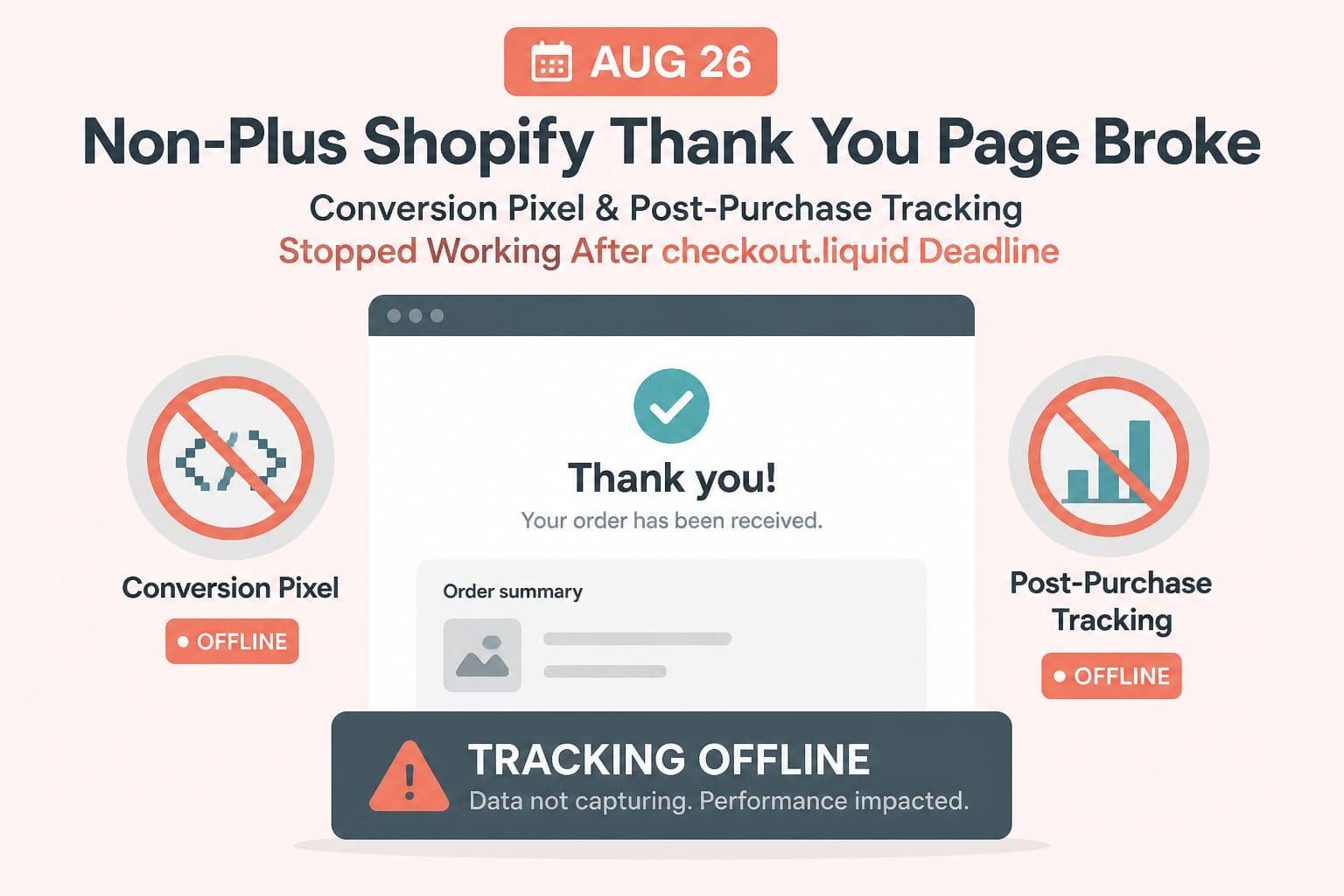
Shopify DevelopmentSep 1, 2026
The Other Checkout Deadline Just Passed: What Broke on Non-Plus Stores on 26 August
The checkout.liquid thank you and order status migration deadline landed on 26 August for non-Plus stores. If your conversion pixels, post-purchase upsells or affiliate tracking still lived there, they stopped working. Here is how to find out.
7 min read
Shopify DevelopmentJul 7, 2026
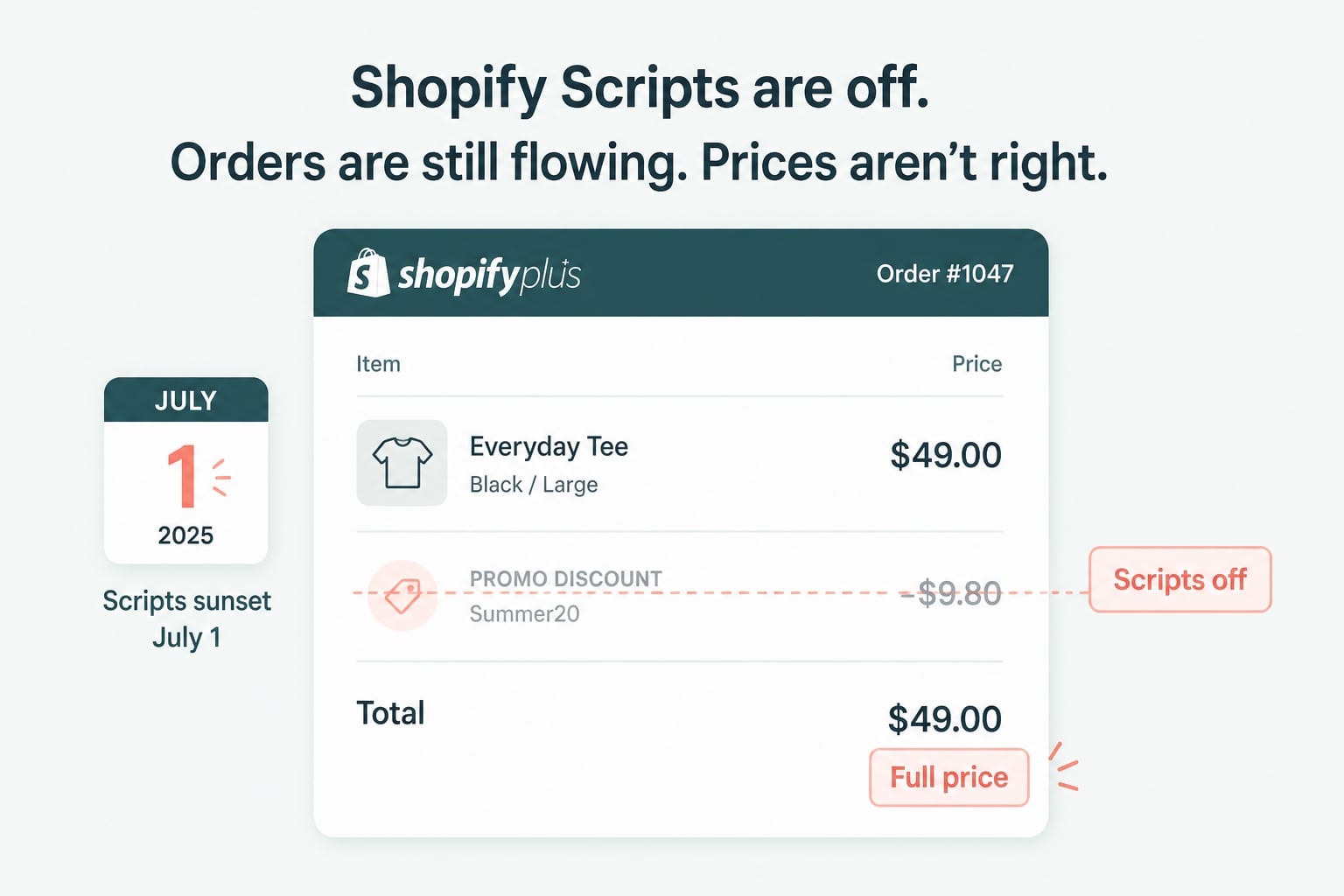
Shopify Scripts Went Dark on July 1: The Post-Sunset Audit
Legacy Scripts stopped executing on June 30. Here is how to find the discount, shipping and payment logic that quietly disappeared from your store, and what to rebuild first.
7 min read
Shopify DevelopmentJul 14, 2026
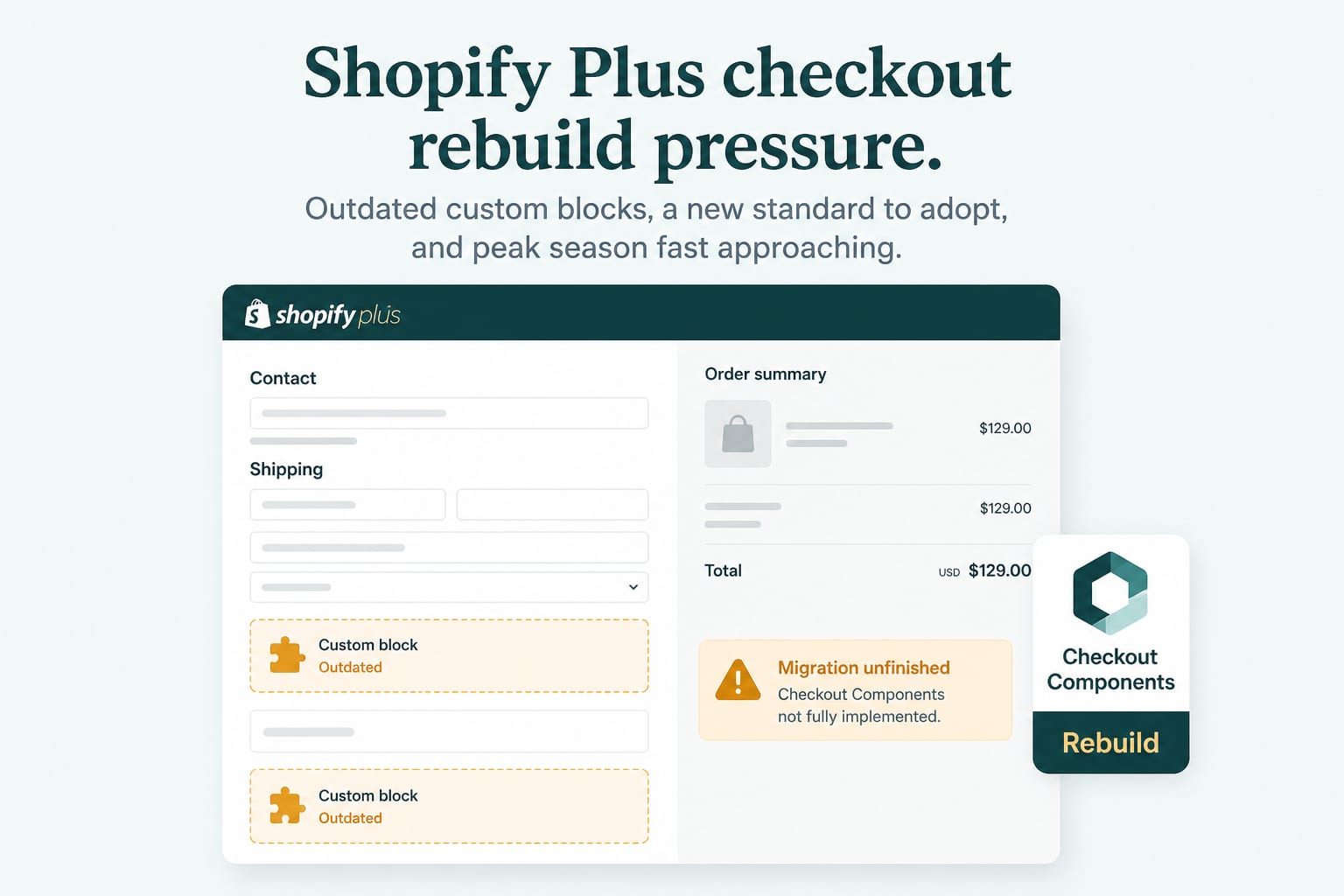
Checkout Components Reached GA on Plus: How to Plan the Rebuild
Summer '26 Editions made Checkout Components generally available for Shopify Plus. Here is what changes architecturally, what it costs to adopt, and how to sequence a migration that does not put peak season at risk.
7 min read